

Identity

Updated: Aug 30, 2023

In Summer 2020, I participated in the 6-week ‘Stolen Lives: The Indigenous Peoples of Canada and the Residential Schools’ course with Facing History & Ourselves. This class not only taught us about the history of residential schools in Canada, it also modeled best practices for teaching about them in our own classrooms. They provided resources, ideas, and plenty of opportunities to reflect on our own learning and to anticipate how we might present this information in our own classrooms.
Armed with all that I had learned in this course, I set out to approach the topic of Orange Shirt Day in a different way with the CLB 7/8 students. What I had learned from the course and the wonderful facilitators was how to engage students’ empathy but appealing to the fundamental aspects of our identity. We started by exploring what were the fundamental aspects of identity with a third-party before beginning to explore our own identities. By understanding what the non-negotiable parts of our own identifies were, this opened a place of understanding for when we began our discussion about residential schools and hearing Phyllis Webstad’s story of Orange Shirt Day.
I started with some TED Talks that I regularly use to introduce ideas of identity:
Taiye Selasi, ‘Don’t Ask Me Where I’m From, Ask Where I’m a Local’
America Ferrera, ‘Your Identity is Your Superpower’
I also included a text from Newsela.com about the Mi’kmaq girl who recorded the Beatles’ song Blackbird in her mother tongue. I provided a video to both the original and Mi’kmaq version, and we discussed the implications of recording it her native tongue for her community.
We then moved on to learn about Phyllis’ story, and How Orange Shirt Day began as an introduction to the topic of residential schools. I then asked the students to complete a KWL (Know, Want to Know, & Learned) chart before we learned more about residential schools and their effects on Indigenous peoples in Canada.
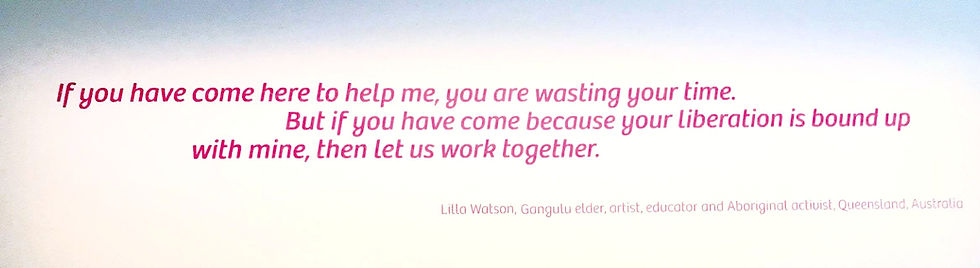
This then led us a discussion of reconciliation and allyship and what responsibility we all have as residents of this country. We viewed some short videos from the CBC which defined the topics of reconciliation and allyship before reviewing Calls to Action 93 and 94 (TRC, 2015) which related specifically to newcomers. Finally, I asked the students to consider what they could do as an ally and to write or record their responses. I was genuinely surprised by the care and thought that they put into their work. They showed genuine empathy and an understanding that they had a role to play as future Canadians.
CBC Kids News (2021). How to be an ally to Indigenous peoples in Canada, CBC
kids news, youtube.com. https://www.youtube.com/watch?v=HGge7mGKChE.
CBC Kids News (2021). What is reconciliation?, CBC kids news, youtube.com.
Facing History & Ourselves (2022). Facing history & ourselves, facinghistory.org.
Facing History & Ourselves (2022). Teaching strategy: Identity charts (remote
learning), Facing History, facinghistory.org. https://www.facinghistory.org/resource-
Ferrera, A. (2019). My identity is my superpower, TED2019.
Newsela.com (2022). Newsela: Canadian Indigenous teen covers Beatles’
‘Blackbird’ in Mi’kmaq language, Newsela.com. https://newsela.com/read/indigenous-cover -
Orange Shirt Society (2021). Phyllis Webstad: On orange shirt day- YouTube,
youtube.com. https://www.youtube.com/watch?v=EuW4WbekhxY.
Selasi, T. (2014). Don’t ask me where I’m from, ask where I’m a local, TEDGlobal 2014.
Truth & Reconciliation Commission of Canada (TRC). (2015). Truth & Reconciliation
Commission of Canada: Calls to action. https://www2.gov.bc.ca/assets/gov/british-columbians-our-



Comments